Travel comfort guide
A Practical Guide to Choosing Comfort for Long-Haul Travel
Hours in a plane, train, or car can turn a small discomfort into the defining feature of a journey. A travel pillow can help—but only when its shape, support, and portability suit the seat and the way you actually rest.
Choosing well is less about finding the most elaborate design and more about matching a simple tool to a specific problem. Do you need to stop your head tipping sideways? Keep your chin from dropping forward? Add cushioning behind your lower back? Or make a cramped seat a little more inviting? The answers point to different shapes, fills, and compromises.
Start with the position you can realistically hold
Travel pillows are often presented as sleep aids, but the practical question is whether they can support you in the position your seat permits. An airplane seat, a train window seat, and a passenger seat in a car each create different constraints. A pillow that works while leaning against a window may be less useful in an aisle seat, where there is no stable surface to rest against. A generously padded design may feel comforting at first, yet become cumbersome if it pushes your head forward.
Before comparing products, picture the journey. Will you be upright for most of it, reclining, or leaning against a wall or window? Do you usually nod forward, tilt to one side, or rest your head against a surface? Think about the time you hope to use the pillow, too: an overnight flight may call for more sustained support than a short daytime trip.
Comfort is personal, and no shape can guarantee sleep. The useful aim is narrower: reduce awkward movement and pressure, and make it easier to settle into a position you can maintain. If possible, test a pillow in a chair with a similar angle to your travel seat. Even a brief trial may reveal that a design feels supportive in one posture but restrictive in another.
The main travel pillow shapes—and what they do
The familiar U-shaped pillow wraps around the back and sides of the neck. Depending on its height and firmness, it may help limit sideways movement when you are sitting upright. Some versions fasten at the front; others remain open. The closure can affect how securely the pillow sits, but it should not feel tight or press uncomfortably against the throat.
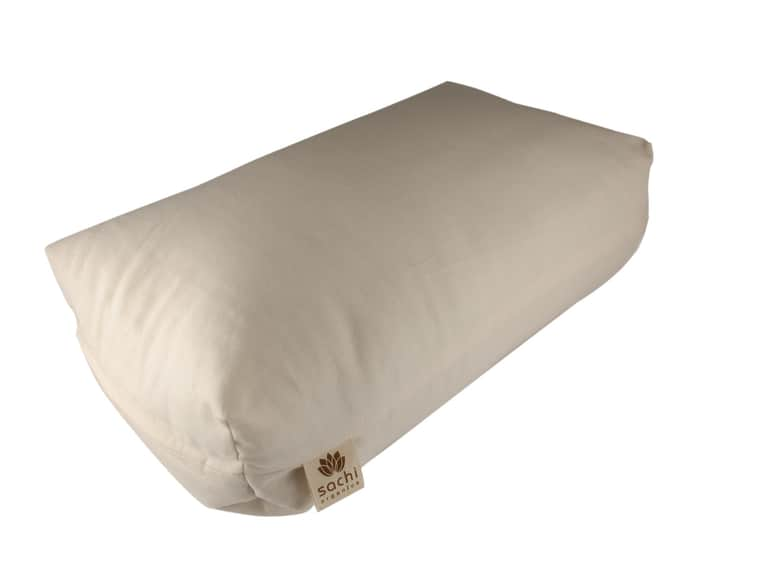
Compact rectangular pillows are more flexible. They can be placed behind the neck, against a window, or at the lower back, depending on the situation. That versatility can be appealing, especially for travelers who prefer not to wear a pillow around the neck. The trade-off is that a simple rectangle may shift more easily and may not provide the same containment as a shaped support.
Inflatable designs are built around packability. Deflated, they can take up less room than many filled pillows, which matters when luggage space is limited. Their comfort depends on inflation: too little can leave them unstable, while too much may make the surface feel hard. Check whether the valve is easy to reach and whether the pillow can be adjusted in small increments rather than only between flat and fully inflated.
Wraparound, scarf-like, and structured neck-support designs use different approaches to holding the head in place. A more engineered shape may feel secure, but it can also be warmer, bulkier, or less adaptable across different bodies and seats. Adjustable designs may allow a better fit, though additional straps, toggles, and components add complexity. The best design is not necessarily the one with the most features; it is the one you can position comfortably and keep in place.
- U-shaped: A common choice for upright sitting and side-to-side support.
- Rectangular: A versatile cushion that can be repositioned around the seat.
- Inflatable: A space-saving option whose firmness can often be adjusted.
- Structured or wraparound: A more enclosing fit that may suit travelers seeking extra stability.
Support is about fit, not just firmness
Firmness attracts attention because it is easy to describe, but it cannot tell you whether a pillow will fit your neck. A firm pillow that is too tall may push your head forward. A soft one that compresses too much may provide little support after a few minutes. The goal is a shape that fills the gap between your head and the seat—or steadies the area you want supported—without forcing your body into a new angle.
Pay attention to pillow height and thickness. A side-support design needs enough structure to meet the head without lifting it excessively. A pillow intended to sit behind the neck should not crowd the space between the head and the seat. For front-facing support, consider whether the design encourages a comfortable, neutral position rather than pressing the chin sharply downward.
Support should feel stable but not rigid. You should be able to make small adjustments, turn your head, and release the pillow without wrestling with it. If a design causes pressure, stiffness, numbness, or persistent discomfort, reposition it or stop using it. A travel accessory should make the journey easier, not require you to tolerate a new source of strain.
There is no single best travel pillow for every sleeper. A person who rests against a window may value a broad, soft surface, while someone in an aisle seat may want a pillow that keeps the head steadier without relying on the cabin wall. Travelers who dislike anything around the neck may prefer a separate cushion. Those differences are not failures of the product; they are reminders that fit and context matter.
Fill materials: feel, bounce, and maintenance
Fill affects how a pillow compresses, rebounds, breathes, and packs. Foam-based fills can contour around the neck or head, but they vary in density and warmth. Some feel slow to respond and hold their shape closely; others feel springier. A compact foam pillow may still take up considerable space, so compare its packed size rather than assuming that a small outer shape will disappear into a bag.
Loose fiber fills often feel soft and familiar. They may be light, but their support can depend on how evenly the filling stays distributed. A pillow that clumps or shifts during use may need regular fluffing and repositioning. Microbead-style fills can flex around the body, though the surface feel is distinctive and may not suit everyone. Inflatable pillows use air rather than a traditional fill, putting adjustability and compact storage at the center of the experience.
Material names alone do not reveal the whole story. Construction, cover fabric, seam placement, and the shape of the pillow influence comfort just as much. A breathable cover may feel more pleasant over a long stretch than a warm, slick surface. A soft fabric can be soothing against the skin, while a textured or removable cover may be easier to manage when traveling.
If you tend to overheat, consider the combined effect of the pillow, clothing, and cabin temperature. Neck pillows sit close to the body and can trap warmth. A lighter cover or more open design may feel preferable, though breathable materials cannot control the temperature of the cabin itself. For people with sensitive skin, look for fabric that feels comfortable against the face and neck, and consider whether it can be removed for cleaning.
Portability: measure the pillow you will actually carry
“Travel size” can mean different things. One pillow may compress into a pouch, another may attach to the outside of a bag, and a third may be compact but too bulky to fit alongside the items you need most. Compare the packed dimensions and weight with your actual luggage. If you travel with a small personal item, every extra object competes with a book, water bottle, headphones, medication, or a change of clothes.
Consider how the pillow is carried when not in use. A storage pouch can keep it contained, but it should be straightforward to use and large enough for the pillow without forcing it in. A clip or strap can make it easy to attach to a bag, though it may snag or swing around. An inflatable model may save space, but only if it is quick and practical to inflate and pack away in the places where you travel.
Portability also includes the effort of handling the pillow during a journey. Can you reach it without unpacking everything? Can it be put away cleanly after use? Does it remain manageable when you move between a gate, a platform, and a seat? A design that is wonderfully supportive but inconvenient to carry may be left at home—the least helpful outcome for any piece of travel gear.
For a frequent flyer, small differences in weight and pack size can matter over time. For an occasional long-haul traveler, a slightly larger pillow may be worth carrying if it is noticeably more comfortable. There is no universal threshold; the useful comparison is between the space a pillow occupies and the comfort it adds during the specific trip.
Cover, cleanliness, and care on the road
Travel pillows encounter more than a bedroom pillow does: they are handled in terminals, placed on seats, packed beside other belongings, and used in shared environments. A removable, washable cover can make routine care simpler. Before packing, check the care label rather than assuming that the whole pillow can go into a washing machine. Some fills tolerate washing; others may be damaged by water, heat, or rough handling.
If the cover is not removable, ask how the pillow can be cleaned and dried. A spot-clean-only product requires a different routine from one with a washable cover. Drying time matters, too. A damp pillow packed away too soon can become unpleasant to use and difficult to air out. When traveling, a lightweight washable cover or clean cloth can provide a practical barrier, provided it does not interfere with the pillow’s fit.
Look closely at closures, seams, and valves. A zipper should not rub against the face or neck. A valve should close securely and be easy to operate. Stitching around areas that bend or compress repeatedly deserves attention because those are the places most likely to show wear. Product care instructions are not fine print to skip: they shape how useful the pillow will remain after repeated journeys.
Keep a travel pillow dry and reasonably clean between uses. Allow it to air after a trip before returning it to a case or luggage. If the cover is washable, use the temperature and method stated on the label. Avoid applying strong fragrances or unapproved cleaners to materials that may contact the face for hours. For travelers with allergies or skin sensitivities, cleaning and material information may be as important as the pillow’s shape.
Match your pillow to the seat and the trip
A window seat offers a surface to lean against, so a compact cushion may help fill space between the head and the wall. The seat’s firmness and the position of the window ledge vary, however; a pillow that is too thick can lift the head away from the seatback rather than make resting easier. Test the angle with the pillow in place before settling in for a long stretch.
In an aisle or middle seat, there may be no dependable wall to lean on. A pillow that supports the neck from behind or limits sideways movement may be more useful than a flat cushion designed for a window seat. If you are in a car as a passenger, seat belts, head restraints, and road movement change what is comfortable. Drivers should not use a pillow or any accessory that interferes with safe posture, visibility, or control of the vehicle.
For train journeys, the seat may offer more room to recline, but headrests and seat shapes vary. A flexible pillow that can move between the neck and lower back can be useful during changing positions. On a long flight, you may also want to use the pillow during a layover or at the gate, which makes easy packing and a washable cover more relevant.
Think about the whole journey rather than the best-case moment. A pillow should be comfortable in the seat you have, manageable during boarding, and easy to stow when you need to move. If you are uncertain, a less specialized design may be a sensible first choice because it can serve more than one purpose. If you already know exactly how you rest, a more specific shape may earn its place in your bag.
A short checklist before you pack
Product descriptions can make small differences sound decisive. Bring the comparison back to the practical details that affect your trip. Use this checklist to narrow the field:
- Position: Does the shape support the way you actually rest in a seat?
- Fit: Is its height appropriate for your neck and the seatback, without pushing your head into an awkward angle?
- Stability: Does it stay in place when you make small movements?
- Feel: Is the firmness and cover texture comfortable against your skin?
- Temperature: Is the design likely to feel too warm around your neck or face?
- Packability: Do the packed dimensions and weight suit your luggage and travel routine?
- Care: Can the cover be cleaned, and do you understand the instructions for the fill?
- Construction: Are the seams, closures, and valves practical and well finished?
- Trial: Have you tested it in a chair or seat position similar to the one you expect to use?
Common mistakes that undermine comfort
One frequent misstep is choosing a pillow by appearance alone. A dramatic curve or thick collar may look supportive but still fit poorly. Another is assuming that firmer always means better. A firm pillow can offer stability, but if its height or angle is wrong, it may create pressure rather than relieve it.
Travelers can also underestimate bulk. A pillow that looks compact on a shelf may occupy a substantial part of a small bag once its storage pouch is included. Check the packed dimensions and, if possible, try fitting it into the luggage you plan to carry. Likewise, do not overlook the cover: a fabric that feels comfortable for a few seconds may feel warm or irritating after a long period of contact.
Finally, avoid treating a travel pillow as a substitute for a workable travel routine. Changing position when possible, staying hydrated according to your needs, and allowing time to move after a long period of sitting may contribute to comfort in ways no cushion can. A pillow is one small piece of a larger plan, not a guarantee of rest or a remedy for ongoing pain.
The best choice is the one that earns its space
There is no universal champion among travel pillows. A frequent flyer who needs a small, light object may prioritize a design that compresses easily. Someone who wants a steadier fit may prefer more structure, while a traveler who changes position often may value a flexible cushion. The right answer depends on seat, posture, personal preference, and how much room is available in the bag.
Start by identifying the movement or pressure point you want to address. Then compare the pillow’s shape, height, fill, cover, care requirements, and packed size. Test it in a realistic sitting position if you can. A few deliberate checks before departure are more valuable than choosing by trend or relying on a promise that one design suits every body.
Long journeys rarely become effortless, but the right support can make a seat feel less demanding. Choose a pillow that fits the way you travel, carry it where it is easy to reach, and keep it clean between trips. In the confined geometry of a long-haul journey, comfort is often built from modest decisions: a better angle, a less crowded neck, a small amount of support in the right place.